
 Text: 941-666-4638
 Call: 941-203-5111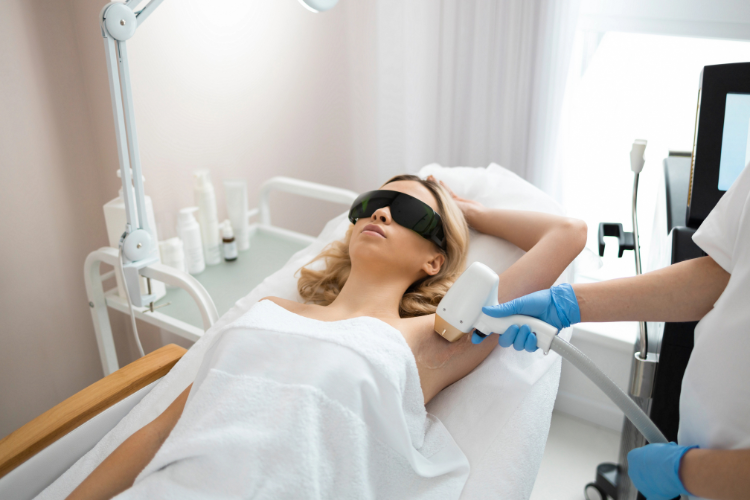
Does Laser Hair Removal Work on Blonde or Gray Hair Yet?
For years, the undisputed champion for permanent hair reduction has been professional laser hair removal, the life-changing treatment for people tired of the endless cycle of shaving, waxing, and ingrown hairs.
However, a significant portion of the population has historically been left out of this revolution: those with blonde, gray, or red hair.
As medical technology advances at a breakneck pace, many people are wondering if laser hair removal is effective for gray hair yet or if it works on blonde hair in 2026.
The curiosity is growing even more as newer, more sophisticated devices hit the market. Although we have seen incredible leaps in how we treat different skin tones, the challenge of light-colored hair remains a unique hurdle defined by the laws of physics.
Before investing your time and money in laser hair removal at your local med spa, check out the following information on its efficacy on blonde and gray hair.
How Laser Hair Removal Actually Works
Laser hair removal works through a process called selective photothermolysis, in which the laser emits a concentrated beam of light that is absorbed by the pigment (melanin) in the hair follicle.
When the melanin absorbs this light energy, it converts it into heat, which travels down the hair shaft to the follicle’s growth center, damaging it and preventing future hair production.
Because the laser is essentially looking for dark pigment against the surrounding skin, laser hair removal results have traditionally been best for patients with a high contrast, i.e., dark hair and light skin.
When there isn’t enough pigment to act as a conductor for that heat, the laser cannot target the root as well, and thus, for many years, light-colored hair couldn’t be treated as effectively.
Why Blonde, Gray, and Red Hair Are Different
The fundamental issue with laser removal of blonde and gray hair is the lack of eumelanin. Eumelanin is the dark pigment that the laser easily identifies.
Blonde hair contains a very small amount of eumelanin or a higher concentration of pheomelanin (yellow-red pigment), which doesn’t absorb the laser’s wavelength as efficiently.
Gray and white hairs have lost their pigment entirely, making the follicle essentially transparent to the laser. Red hair contains pheomelanin, which is notoriously difficult for standard lasers to target.
There is a common myth that simply using a stronger laser or turning up the energy will fix the issue, but increasing the energy on a hair with no pigment doesn’t hurt the hair; it only increases the risk of burning the surrounding skin.
Also Read: Why Fall and Winter Are Ideal for Laser Hair Removal
The Truth About Blonde, Gray & White Hair and Laser Results
So, does laser hair removal work on blonde hair at all? The answer is: it depends on the shade.
If your hair is dirty blonde or light brown, you may actually see significant laser hair removal effectiveness. These hairs often contain enough trace amounts of eumelanin to absorb heat.
However, if you have Scandinavian blonde or platinum hair, the results are often inconsistent or minimal. You might see a 20 to 30 percent reduction rather than the 80 to 90 percent seen in dark-haired patients. For many, this isn’t a high enough return on investment to justify the cost of a full treatment package.
Despite marketing claims you might see online, gray and white hair remains the most resistant to all forms of laser energy. Once the melanocytes, or pigment-producing cells, in a follicle stop working, the proverbial bridge for the laser energy is gone.
Current limitations mean that if the hair is white, the laser light will either pass through it or reflect off it without generating the heat needed to kill the follicle. Even with the newest laser technology for blonde hair removal, white and gray hairs are essentially invisible to the machine.
Also Read: Brazilian to Full-Body: Which Laser Hair Removal Option Is Right for You?
What About Combination Hair Types?
Many patients aren’t just one color, and it is very common to have salt-and-pepper hair, especially in areas like the beard or bikini line. In these cases, a medical spa provider will approach treatment with a hybrid plan.
The laser will successfully eliminate the dark, pigmented hairs, leaving only the grays behind. For many patients, this is still a massive win, as it reduces overall density and stubble, even if they still have to occasionally shave the remaining light hairs.
Alternative Options for Blonde or Gray Hair
If you are strictly seeking permanent hair removal for light hair, electrolysis may be the better option for you:
- How it works – Unlike lasers, electrolysis doesn’t use light. It uses a tiny probe that delivers a chemical or heat current directly into the follicle.
- Effectiveness – Because it targets the follicle physically rather than optically, it works on all hair colors, including blonde, gray, white, and red.
- The Catch – It is a much slower process, treating only one hair at a time, whereas a laser can treat hundreds of hairs in a single pulse.
Can Hair Be Treated Earlier to Prevent Graying Issues?
One of the best pieces of advice for long-term grooming is to start laser hair removal earlier in life. That’s because, as we age, our hair naturally loses pigment.
If you wait until your late 40s or 50s to start treating areas like the chin or back, you may find that many of those hairs have already turned gray. By starting while the hair is still dark, you can lock in your results and prevent the frustration of having untreatable white hairs later on.
How a Professional Evaluation Makes a Difference
A consultation with a trusted provider is the most important step of the laser hair removal process. A professional at a reputable medical spa will perform a patch test and a visual follicle assessment to see if you’re a good candidate.
They will look at the diameter of the hair and the depth of the color and can often tell you immediately if you are a “good,” “fair,” or “poor” candidate. This transparency prevents you from wasting money on a series of treatments that won’t yield the results you’re looking for.
Who Might Still Be a Candidate
If you have lighter colored hair, you might still be a good candidate for laser hair removal treatment if:
- Your hair is dark blonde or has a reddish-brown tint.
- You have a mix of dark and light hair and only want to reduce the dark hair.
- You are okay with hair reduction rather than total removal.
Expert Laser Hair Removal in Sarasota
In sum, we have seen incredible advances in laser hair removal results for light hair, but the technology still requires a target. For those with light brown or dark blonde hair, the results are better today than ever. However, for those with truly blonde, gray, or white hair, the laser is still limited by the lack of pigment.
Honest expectations lead to the best outcomes. If you are in the Sarasota area, the best path forward is to seek an evaluation from a provider who prioritizes education over sales. Laser hair removal isn’t one-size-fits-all, and choosing the right treatment, whether it’s laser or electrolysis, is the only way to get the smooth skin you deserve and a return on your investment.
Is laser hair removal right for you? Book an appointment today at Elite Medical Spa of Sarasota to find out.