

Laser Hair Removal for Facial Hair in Women
Countless women around the world grow tired of the endless cycle of shaving, waxing, tweezing, or threading facial hair on areas like the upper lip, chin, jawline, cheeks, and sideburn region. These methods remove or shorten visible hair temporarily, but they do not produce the longer-term reduction that laser treatment is designed to achieve.
Professional laser hair removal targets the follicle itself to achieve longer-term reduction. Multiple treatments are generally required because hair follicles are most responsive during specific phases of the growth cycle. Women in Sarasota who want a longer-term approach can explore facial laser hair removal at Elite Medical Spa. Keep reading to learn more about how the treatment process works.
Why Do Women Develop Unwanted Facial Hair?
Not all facial hair is the same. Fine, light vellus hair is normal and often barely noticeable. Darker, thicker terminal hair is the type that most women find bothersome when it appears on the upper lip, chin, jawline, sideburns, or cheeks.
Genetics, age, and individual hair-growth patterns all play roles. Changes associated with age, pregnancy, menopause, certain medications, and hormonal conditions can also affect facial hair growth. In some cases, hormonal conditions contribute to more noticeable growth. Laser hair removal addresses the hair follicle; it does not treat any underlying hormonal cause, so understanding this distinction helps set realistic expectations before treatment.
Also Read: Beyond Hair Reduction: What Laser Treatments Offer for Long-Term Skin Confidence
How Does Laser Hair Removal Work on Female Facial Hair?
Facial laser hair removal relies on selective photothermolysis. The laser emits a specific wavelength of light that is absorbed by the melanin in the hair shaft. That energy travels down to the follicle and generates heat, which can damage the structures responsible for future growth.
Because the treatment works on the follicle rather than simply clearing the surface of the skin, it produces laser hair reduction rather than the temporary results of shaving or waxing. Hair grows in cycles: anagen (active growth), catagen (transition), and telogen (resting). Lasers are most effective on follicles in the anagen phase. A single session therefore reaches only a portion of the follicles present. Subsequent treatments target additional follicles as they enter the responsive phase. This is why a series of sessions is standard for laser treatment for unwanted facial hair and why results build gradually.
Does Laser Hair Removal Work on Facial Hair in Women?
Individual results depend on several factors, including:
- Hair color
- Hair thickness
- Skin tone
- The specific facial area treated
- Hormonal influences
- The laser technology and settings used
Darker, more pigmented hairs generally absorb laser energy more effectively than very light, gray, or white hairs. Coarser hairs on the chin may respond differently from finer upper-lip hairs. Skin tone also matters because the laser must distinguish hair pigment from surrounding skin.
Laser hair removal is best understood as a method of long-term hair reduction rather than a guarantee that every treated hair will be permanently eliminated. Temporary methods simply clear what is visible on the surface. Laser treatment aims to impair the follicle so that future growth is reduced in density, thickness, and rate.
Individual response varies, and maintenance sessions are sometimes needed later if new or previously dormant follicles become active. An experienced provider can evaluate suitability and discuss realistic outcomes based on a patient’s unique hair and skin characteristics.
Also Read: Why Some Areas Respond Slower to Laser Hair Removal
Laser Hair Removal for the Upper Lip, Chin, and Other Facial Areas
Upper-lip hair is often finer to moderate in thickness and sits in a highly visible area, so precise energy delivery and careful technique matter. Chin hair can be darker or coarser and is more frequently influenced by hormones; laser hair removal for women’s chin hair therefore requires thoughtful assessment of density and growth pattern. Jawline growth varies widely between individuals and may blend into the sideburn area. On the cheeks, providers typically focus on darker, unwanted hairs while leaving finer, desirable facial hair undisturbed.
Because the face is sensitive and highly visible, careful assessment and customized treatment planning are essential. The upper lip and chin are common facial treatment areas, but each patient’s hair characteristics, skin tone, growth pattern, and goals help determine the appropriate approach.
Is Laser Hair Removal Safe for Women’s Facial Hair?
Laser hair removal is generally considered safe for appropriate candidates when treatment involves proper skin assessment, appropriate device selection and settings, and careful technique. Temporary reactions such as mild redness, slight swelling around treated follicles, or short-term sensitivity are common and typically resolve within hours to a few days.
Sun exposure increases risk, so patients are advised to protect treated skin and avoid tanning before and after sessions. Providers also review medications, recent sun exposure, skin conditions, and medical history during consultation. Following pre- and post-treatment instructions further supports safety and comfort.
How Many Laser Hair Removal Sessions Are Needed for Facial Hair?
A series of treatments is typically needed because hair follicles are not all in the same stage of the growth cycle at the same time. Not every follicle is active at the same time, so spaced sessions allow previously resting follicles to enter the growth phase and become treatable. The exact number varies. Factors that influence the total include hair density, color, thickness, skin characteristics, hormonal influences, and the specific facial area.
Many patients notice progressive reduction after several sessions, yet some require additional treatments or later maintenance visits if new growth appears over time. Thus, there is no universal number; a personalized plan developed during consultation provides the most accurate guidance.
What to Expect During and After Facial Laser Hair Removal
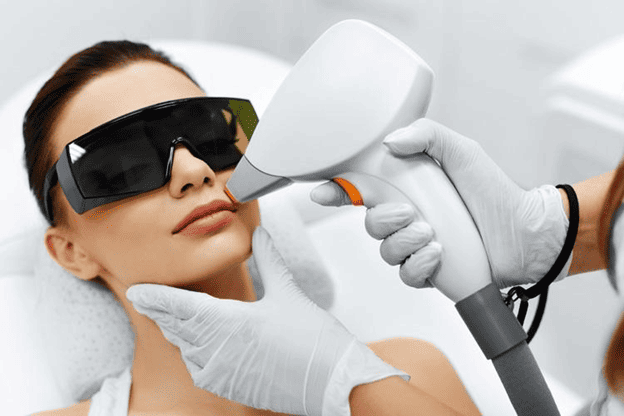
A typical laser hair removal appointment begins with skin assessment and a review of treatment goals. The area is prepared, and protective measures are applied as needed. The laser is then delivered in a series of pulses across the treatment zone. Sensations vary; many patients describe a quick snapping or warm feeling. Immediate responses may include mild redness or a sensation similar to a mild sunburn that settles relatively quickly.
Aftercare typically includes following the provider’s instructions, avoiding unnecessary irritation to the treated area, and protecting the skin from sun exposure. Patients usually begin to notice thinner, slower, or reduced density after a few sessions as treated follicles respond. Exact timelines depend on individual factors and the treatment schedule.
Also Read: Why Laser Hair Removal Results Vary by Body Area, and What That Means for Your Treatment Plan
Expert Laser Hair Removal in Sarasota
Facial hair can vary considerably in color, thickness, density, and growth pattern, which is why treatment should begin with an individualized assessment. At Elite Medical Spa in Sarasota, our team evaluates your skin and hair characteristics, treatment area, and goals before recommending a treatment plan.
FAQs
Does laser hair removal work on facial hair in women?
Laser hair removal can provide long-term reduction of unwanted facial hair, particularly when the hair contains enough pigment to effectively absorb the laser energy. Results vary based on hair characteristics, skin tone, hormonal influences, and other individual factors.
How does laser hair removal work on female facial hair?
Laser energy is absorbed by pigment in the hair and converted to heat that reaches the follicle, impairing its ability to produce new hair with multiple treatment sessions.
How many laser hair removal sessions are needed for facial hair?
A series is standard because of the growth cycle. The exact number depends on hair density, color, thickness, skin type, hormonal factors, and the facial area treated. Maintenance may be recommended later for some patients.
Is laser hair removal safe for women’s facial hair?
When performed by trained providers using appropriate technology and settings after proper assessment, it is generally considered safe.
Can laser hair removal permanently reduce facial hair?
Laser hair removal is intended to provide long-term hair reduction, but it does not guarantee that every treated hair will be permanently eliminated. Some patients may need maintenance treatment as hair-growth patterns change over time.
Disclaimer: This educational article was written under the guidance of licensed providers at Elite Medical Spa and is not a substitute for professional medical advice.