

Injectables After Weight Loss: What Patients Should Know
Whether through lifestyle changes, bariatric surgery, or the recent rise of GLP-1 medications, the physical transformation from weight loss is most often life-changing. However, as the body changes, the face can follow suit in ways that catch many patients by surprise.
While we celebrate the reduction of visceral fat, the loss of subcutaneous facial fat can lead to what is colloquially known as “Ozempic face” or “weight loss face.”
This happens because of a fundamental shift in facial architecture. If you want to understand how to navigate aesthetic treatments during your weight loss transition, keep reading to learn how you can maintain a healthy, natural, and vibrant appearance.
How Weight Loss Affects Facial Structure
The face is composed of several layers, including bone, muscle, fat pads, and skin. Weight loss primarily impacts the fat pads, which are distributed in specific compartments across the face. When these fat pads shrink, the skin loses its internal support. This leads to three distinct issues:
- Volume Loss: Sunken temples, hollowed cheeks, and deep tear troughs under the eyes.
- Skin Laxity: Because the envelope, aka the skin, is now too large for its contents, aka the fat, it begins to sag, causing jowls and a loss of jawline definition.
- Bone Visibility: Without a layer of fat to soften the features, the underlying bony structure becomes more prominent, which can sometimes cause a gaunt or unnaturally sharp appearance.
This process only gets amplified by rapid weight loss. When your weight drops quickly, the skin doesn’t always have the elasticity to shrink-wrap the new facial contours, making the signs of depletion much more obvious.
Why Injectables Can Help and When They Can’t
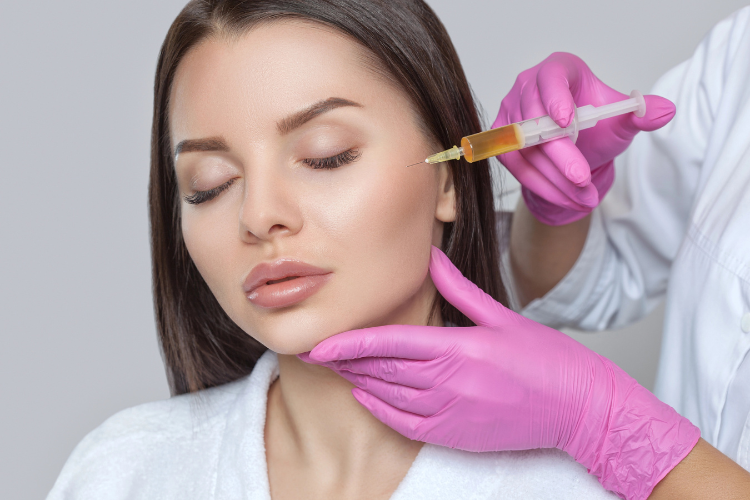
Dermal fillers and neuromodulators like Botox are powerful cosmetic tools, but they come with their own limitations. Fillers are excellent at restoring lost volume and lifting tissues by providing structural support at the cheekbones or jawline. Neuromodulators can soften the shadows and wrinkles that become more apparent when skin is less taut.
However, injectables are not a substitute for surgery. If a patient has significant excess skin that hangs or folds, no amount of filler can safely fill that space without making the face look unnaturally puffy. In these cases, a surgical lift may be the more appropriate step, with injectables serving as a secondary refinement.
Also Read: Top 7 Cosmetic Concerns That Injectables Can Treat—No Surgery Required
Timing Matters: When to Start Treatment
One of the most common questions patients have who have recently lost a lot of weight is when they should start treatment with injectables.
The answer is almost always: Wait until your weight has stabilized.
Injecting fillers while you are still actively losing weight is like trying to hit a moving target. If you fill your cheeks today but lose another 20 pounds next month, the filler may no longer be in the optimal position to support your features, or the face may hollow out further, making the previous work look inadequate or misplaced.
Generally, we recommend being at a stable maintenance weight for at least three to six months before embarking on a comprehensive injectable plan.
Fillers After Weight Loss
The strategy for a post-weight-loss face is vastly different from a standard anti-aging treatment because the goal is not to replace everything that was lost. If a patient lost five pounds of fat from their face, injecting five pounds of filler would be disastrous, for example.
Instead, the approach focuses on structural support versus surface volume. Rather than filling in every wrinkle, a skilled injector will place smaller amounts of high-G-prime (sturdier) fillers deep against the bone in the temples and mid-face.
This becomes a literal scaffold to anchor the sagging skin. By lifting from the top and middle of the face, the lower face, including the nasolabial folds and marionette lines, often improves without needing direct injection.
Neurotoxins After Weight Loss
Volume loss also changes how our facial muscles interact. When the fat pads are gone, the muscles of expression are closer to the surface.
Furthermore, as the face sags, certain depressor muscles (these pull the corners of the mouth or the neck down) can become more dominant.
Using neurotoxins like Botox or Xeomin after weight loss requires a delicate touch. The goal is to balance these muscles to prevent heaviness. For example, treating the platysmal bands in the neck or the muscles that pull down the corners of the mouth can provide a subtle chemical lift that complements the volume restoration of fillers.
For a closer look at how Botox can relax the platysma and support the neck-jawline transition, see our Nefertiti Lift guide.
Patients who plan recurring Botox treatments can also review the Elite VIP Botox Membership for ongoing treatment benefits and member savings.
Common Mistakes to Avoid
The most frequent error in post-weight-loss aesthetics is chasing the pre-weight-loss look. Patients often bring in photos of themselves from 50 pounds ago and ask to look like that again.
Unfortunately, overfilling the face to recreate a fuller look will usually result in what we call filler fatigue or “pillow face,” where the face looks distorted during movement.
Another mistake is treating isolated areas like just the lips or just the under-eyes without addressing the surrounding depletion. A full lip on a gaunt face can look out of place, for instance, so balance and harmony should be the overarching goals.
The Role of Skin Quality and Combination Treatments
Injectable treatments alone can only do so much if the skin itself is thin, crepey, or lacks collagen. This is why combination therapy is the gold standard for weight loss patients.
We often recommend biostimulators like Sculptra or Radiesse as a first step. These trigger the body to produce its own collagen naturally over several months. This thickens the skin envelope and provides a more natural, long-lasting foundation.
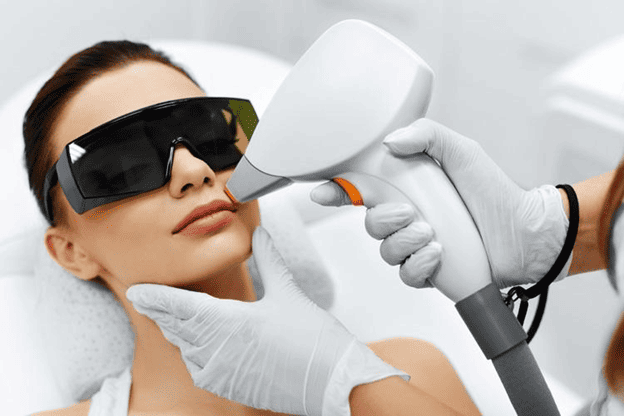
Additionally, energy-based treatments, such as RF microneedling or CO2 lasers, can help tighten the skin, making subsequent injectable results appear more seamless.
Choosing the Right Injector
A post-weight-loss face is one of the most complex challenges an injector can face. You need a provider who understands the anatomy of fat compartments and the physics of skin laxity. During your consultation, ask:
- “How do you approach volume loss specifically caused by rapid weight loss?”
- “Do you think I’m a candidate for biostimulators, or do I need traditional filler?”
- “At what point would you refer me to a surgeon instead of continuing with injectables?”
And remember, a great injector is one who won’t be afraid to say “not yet” or “not this much.”
Also Read: Your First Injectable Treatment? Here’s Exactly What to Expect
Expert Injectables at Elite Medical Spa of Sarasota
Weight loss is a victory for your health, and your face should reflect that vitality instead of giving the dreaded Ozempic face aesthetic. However, because the structural changes are so profound, the treatment plan must be equally thoughtful and staged.
By focusing on balance, structural health, and natural expression you can look like the best version of your new self. Be patient with the process, choose an experienced partner for your journey, and remember that the most beautiful result is one that looks like you, just healthier and more vibrant.
Are you ready to restore your glow after your weight loss journey? Book an appointment at Elite Medical Spa of Sarasota today to get started.